
Conclusion and lower limb care summary pathway
Downloaded content date
Last reviewed: 18/12/2025
Conclusion and lower limb care summary pathway
Conclusion and lower limb care summary pathway

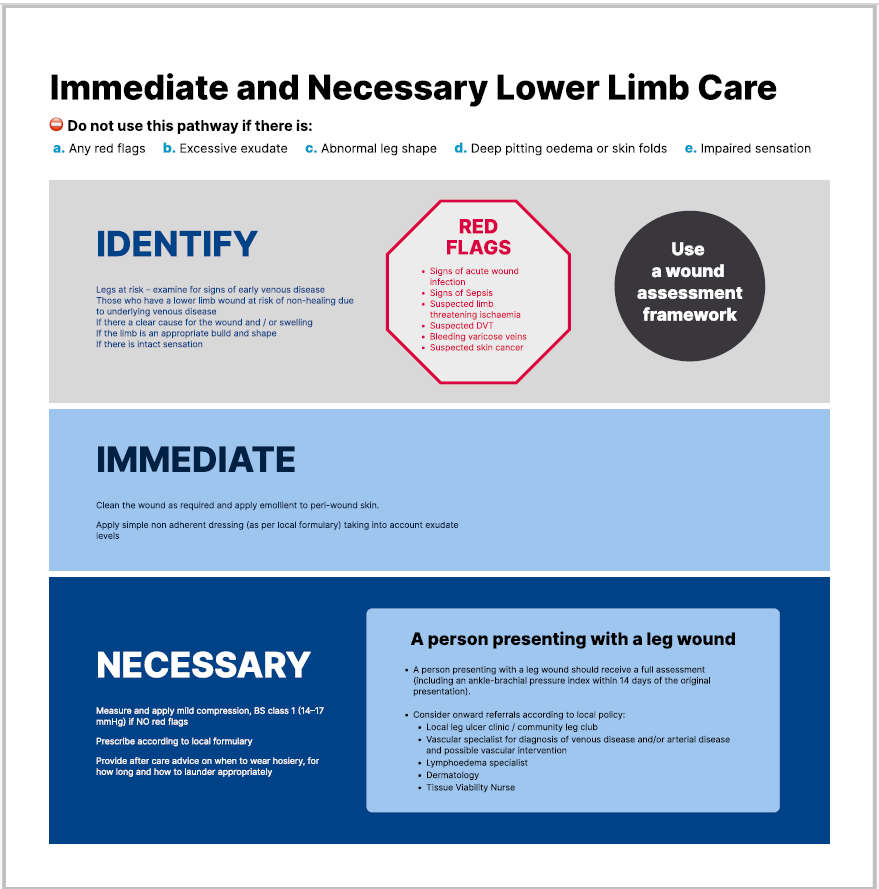
Early identification and intervention in lower limb wounds is vital to prevent deterioration and reduce the risk of venous ulceration. When red flags are excluded, mild compression therapy can be safely started in primary care to support healing and improve outcomes.
Consistent education, assessment and referral pathways are key to successful long-term management and prevention.
Compression therapy plays a crucial role in reversing the effects of gravity in the lower limb and promoting wound healing. Mild compression can be safely used as part of first-line treatment to support recovery and help prevent the progression of venous disease.
In the absence of red flag symptoms, an ABPI is not required to begin immediate and necessary care. Where wounds are present, a holistic assessment should be arranged within 14 days.
Ultimately, a shift in mindset is needed—from reactive wound management to proactive prevention. Primary care nursing staff are well placed to lead this change and embed a preventative approach to lower limb care.
Lower limb care summary pathway
Resource lead(s)
Contact details for this resource lead:
