
Positive behaviour support (PBS)
Downloaded content date
Last reviewed: 20/03/2026
Positive behaviour support (PBS)

Some people with learning disabilities may display behaviours that are difficult to interpret or manage.
These behaviours may:
- challenge us because we may not understand what the person is trying to communicate
- cause harm to themselves, others, or their environment
- limit a person’s independence and overall quality of life.
What Is PBS?
Positive Behaviour Support (PDF) is a framework used to support people with challenging behaviours. It focuses on understanding the reasons behind behaviours and helping individuals develop alternative ways to communicate their needs.
PBS has been adopted and adapted across all four nations of the UK and is recognised as a best-practice approach in supporting people with learning disabilities.
Core principles of PBS
At the heart of PBS is a person-centred approach. Key principles include:
- improving independence and quality of life
- understanding what is important to the person
- avoiding aversive interventions or punishment-based strategies
- supporting the development of meaningful skills.
Functional Behaviour Assessment (FBA)
FBA (PDF) is a structured process carried out by a trained health professional to identify the purpose or "function" of a behaviour. It helps determine what the person is trying to communicate or achieve through their actions.
Developing a PBS Plan
Once the function of the behaviour is understood, a PBS plan can be developed collaboratively with the person and their support network. The plan aims to:
- build new skills
- reduce the need for challenging behaviours
- avoid triggers or situations that may lead to distress.
Multi-elemental interventions
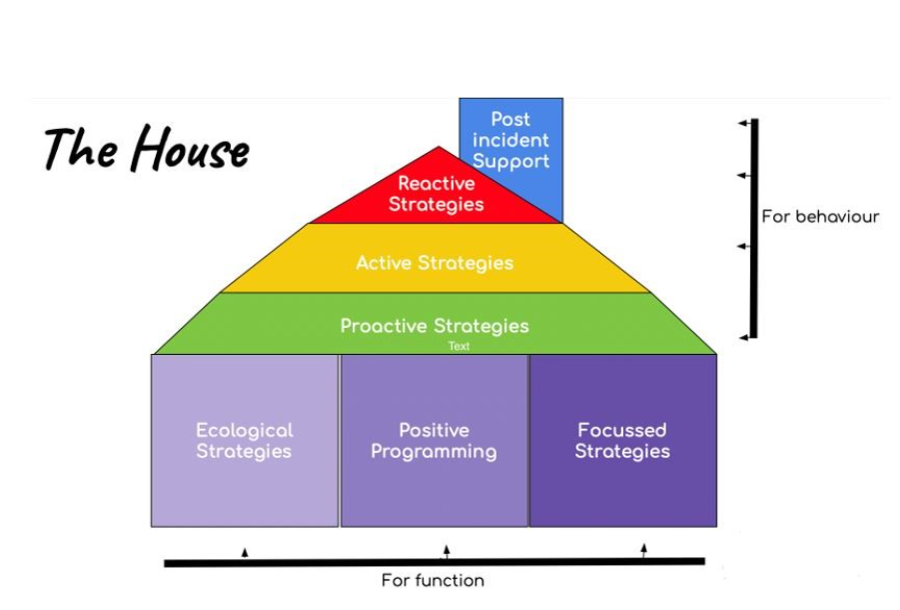
PBS plans are multi-elemental, meaning they take a holistic view of the person’s life. This includes:
- environmental adjustments
- skill-building activities
- communication support
- emotional and behavioural strategies.
These interventions are tailored to the individual and designed to promote long-term wellbeing and independence.
Further information
Positive Behaviour Support (PBS)
UK-wide
- PBS Academy UK. About Positive Behaviour Support.
- NHS England. PBS Competence Framework (PDF).
England
- Positive Behaviour Support. Oxford Handbook of Learning and Intellectual Disability Nursing.
- Challenging Behaviour Foundation. Positive behaviour support.
- Health Education England. The key messages about Positive Behaviour Support (PDF).
- Royal College of General Practitioners: Health Checks Toolkit.
- Skills for Health. Supporting autistic people and/or people with a learning disability.
Guidance and policy
- NICE (2015). Challenging behaviour and learning disabilities.
- NICE (2018). Learning disabilities and behaviour that challenges: service design and delivery.
General health
- NHS Gloucestershire Health and Care NHS Foundation Trust. The A to Z of health issues (PDF).
- NHS Learning Disability and Autism. Improving health.
Scotland
- Scottish Commission for People with Learning Disabilities (SCLD). Positive Behaviour Support (PBS).
- Mental Welfare Commission for Scotland.
Health checks
- Down’s Syndrome Scotland. Annual health checks.
- NHS Education for Scotland . Once for Scotland. Learning disabilities.
Observatory and assembly
Gender-based violence
- Public Health Scotland. Gender-based violence and learning disability.
Restraint reduction
- SCLD. Restraint Reduction Scotland.
Mental health and autism
- Mental Welfare Commission for Scotland. Good practice guides.
- National Autism Implementation Team (NAIT).
Fetal Alcohol Spectrum Disorder (FASD)
Screening
- NHS Lothian. Health screening.
- NHS Inform Scotland. Screening in Scotland.
Wales
Positive Behaviour Support (PBS)
- Public Health Wales. Supporting healthy behaviours.
Education and Frameworks
- Welsh Government. Learning Disability Educational Framework for Health Care staff in Wales (PDF).
Northern Ireland
General resources
Resource lead
Contact details for the resource lead(s):
